Small ship cruises aren’t simply about where you go. They’re about how closely you get to experience it.
Small ships can take you into places larger vessels often can’t, from quiet harbours and remote island communities to narrow fjords and wildlife-rich coastlines. With fewer people on board and more focus on what’s happening beyond the ship, the destination becomes the reason for the journey.
But there’s no single ‘right’ size of ship. Where you’re going, how you like to travel and what you want to experience all make a difference. We know the ships and operators well, so we’ll help you understand those differences and find the one that fits the way you want to explore.
What difference does ship size make?
Ship size can affect where you dock, how quickly you get ashore, the atmosphere on board and how much time you have to experience the places you came to see.
The experience
Larger cruise ships
Smaller cruise ships
Where they can go
Larger cruise ships
Usually follow routes suited to larger ports and established cruise infrastructure.
Smaller cruise ships
Can often access smaller ports, harbours, bays and waterways.
Going ashore
Larger cruise ships
More guests can mean a longer process of getting on and off the ship.
Smaller cruise ships
Easier, quicker access ashore, with fewer guests getting on and off the ship.
Life on board
Larger cruise ships
A wider choice of restaurants, entertainment and onboard facilities.
Smaller cruise ships
A quieter, more relaxed atmosphere with fewer people around you.
Focus of the journey
Larger cruise ships
The ship itself can be a significant part of the travel experience.
Smaller cruise ships
The destination tends to take centre stage.
Who it suits
Larger cruise ships
Ideal if extensive onboard facilities, entertainment and choice matter most to you.
Smaller cruise ships
Ideal if access, time ashore and exploring more deeply are your priorities.
How smaller ships get you closer
There’s more to the size of a ship than what you can see above the water. Its draft – the depth of the ship below the waterline – can influence where it’s able to go.
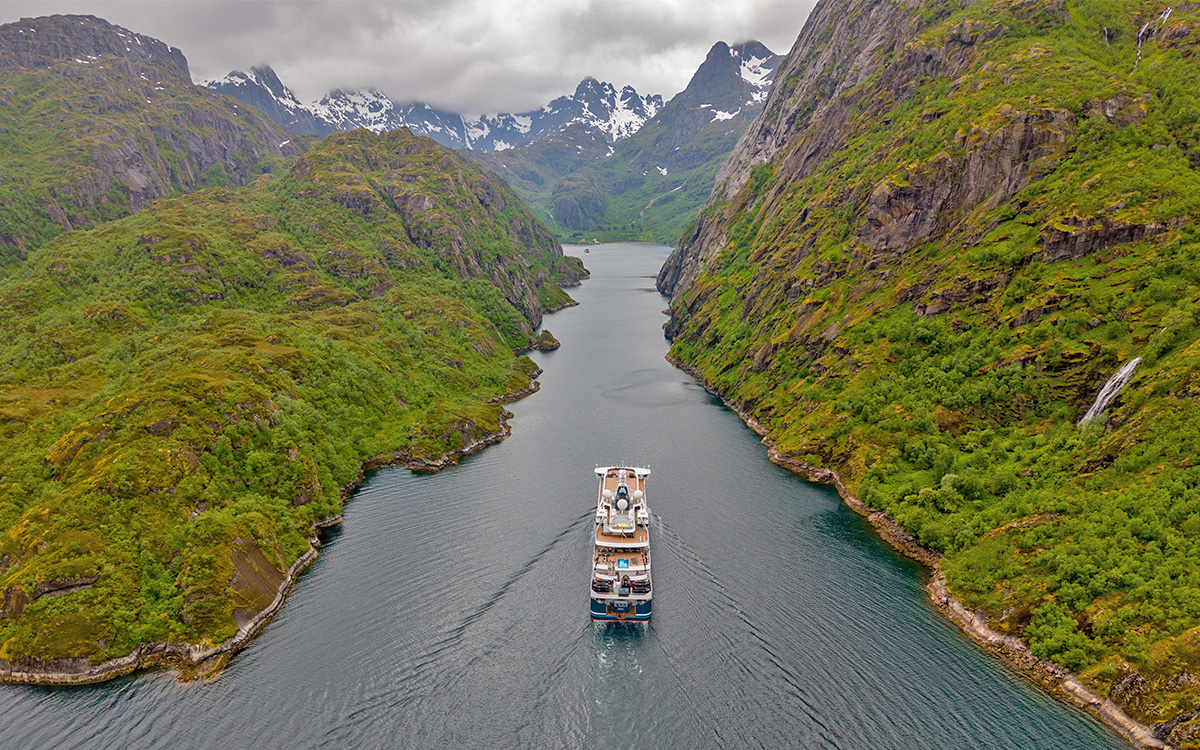
A shallower-draft ship may be able to enter narrower waterways and smaller harbours that deeper vessels can’t. In the Norwegian fjords, Greenland and Svalbard, that can mean more possibilities for exploring the coastline and the smaller places along it.
Norwegian Fjords
Sail deep into fjords such as Geirangerfjord and Nærøyfjord, where waterfalls tumble from sheer mountainsides and small villages sit at the water’s edge. Smaller ships can take you beyond the larger ports to quieter corners of Norway’s deeply indented coastline.
Greenland
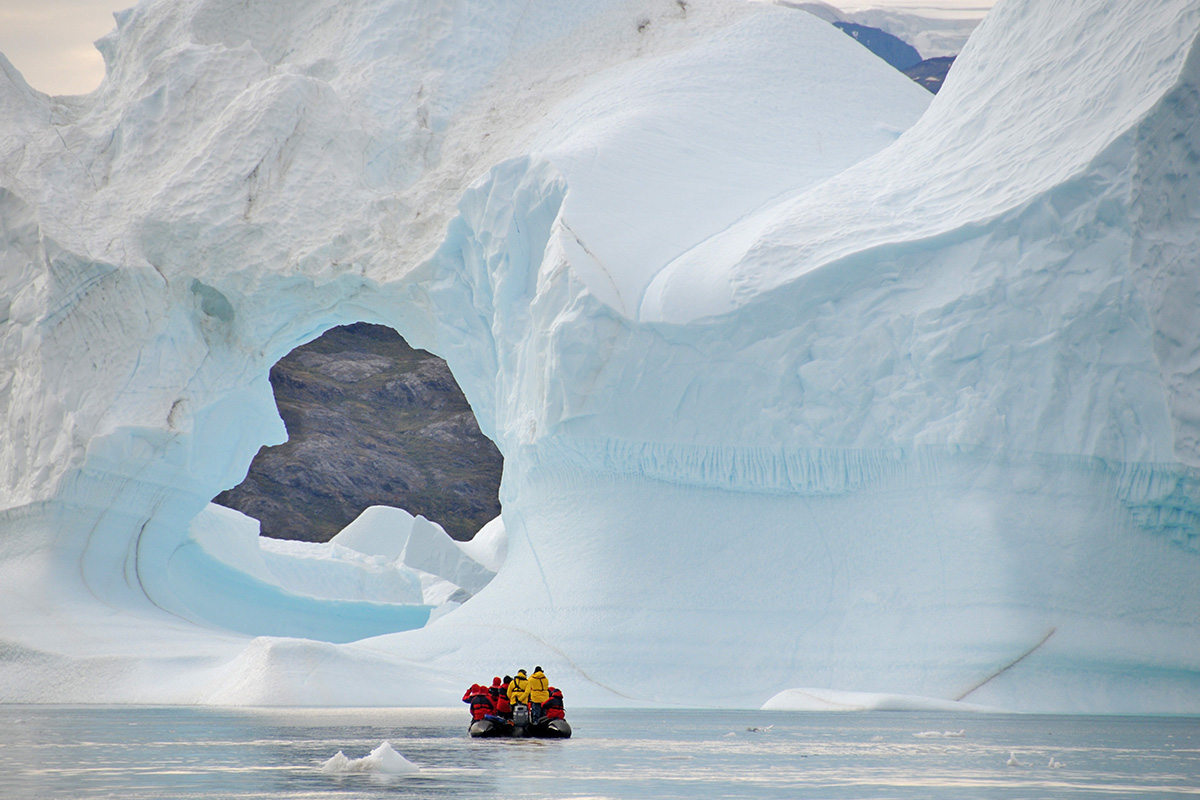
Greenland is a place of enormous fjords, drifting icebergs and small coastal communities with few roads between them. Smaller ships can explore places such as Scoresby Sund and Disko Bay, combining days among ice-filled landscapes with visits to settlements along the coast.
Svalbard
Deep inside the Arctic Circle, Svalbard is all glaciers, mountains and sea ice, with the chance to encounter walrus, Arctic foxes and polar bears. A smaller ship can explore fjords such as Hornsund and Kongsfjord, with the route adapting to ice, weather and wildlife along the way.
Mediterranean
Think beyond Barcelona and Rome. Smaller ships can reach historic island ports and tucked-away harbours across the Adriatic, Greek islands and Dalmatian Coast – places where you can step ashore close to old towns, waterfront cafés and centuries of Mediterranean history.
Why passenger numbers matter ashore
Passenger numbers can shape the experience ashore as much as they do life on board. Nowhere is that clearer than Antarctica, where no more than 100 visitors from a ship can be ashore at one landing site at the same time.
Fewer than 100 guests
On the smallest expedition ships, everyone may be able to go ashore at the same time. That can mean fewer rotations and a simpler journey from ship to shore, leaving the day feeling less dictated by logistics.
200+ guests
On larger expedition ships, landings are usually organised in groups. While one group explores ashore, another might head out by Zodiac, with the groups swapping later. A well-run operation can make this feel surprisingly smooth.
What is a Zodiac?
A Zodiac is a small inflatable boat used to take you between the ship and shore when there’s no harbour or jetty. But getting from A to B is only part of their role. From weaving between icebergs to approaching remote beaches and exploring coastlines inaccessible to the ship, a Zodiac can become part of the adventure itself.
What about motion and seasickness on a small ship cruise?
It’s one of the questions we’re asked most often, and understandably so. Smaller ships can feel more movement than larger vessels, particularly in open water, but the ship you choose, your cabin position and the route itself can all make a difference.
Choose your cabin carefully
If you’re concerned about motion, a cabin lower down and closer to the centre of the ship will generally experience less movement than one higher up or towards the bow or stern.
Look at the ship, not just its size
Many modern small ships have stabilisers designed to reduce rolling at sea. We can talk you through the differences between ships rather than assuming passenger numbers tell you everything.
Think about the route
Some itineraries involve more exposed stretches of open water than others. If seasickness is a concern, tell us. We can help you understand where those passages occur and which routes might suit you better.
Advice based on first-hand experience of small-ship cruises
We spend time on the ships we recommend because the details that make one voyage right for you aren’t always obvious from a deck plan or itinerary. From how quickly you can get ashore to what evenings actually feel like on board, first-hand experience helps us give you more useful advice.
“Baja is one of those places where a small ship really changes the experience. With just 66 guests on board, you can get close to the wildlife and spend more time out on the water. Seeing mobula rays leap from the sea, swimming with whale sharks and sea lions, and spotting a blue whale were real highlights for me. The clear water was perfect for snorkelling, and having kayaks and SUPs on board meant we could explore quiet coves and mangroves at our own pace.”