Polar bears or penguins? Greenland’s fjords or the Antarctic Peninsula’s ice-filled channels? If you’re comparing the Arctic vs Antarctica, the choice starts with what you most want to experience.
Both regions offer extraordinary landscapes, wildlife and opportunities to explore by expedition ship. But they differ in geography, culture, seasons and the journeys that take you there.
Here’s how to begin choosing your polar expedition.
What is the difference between the Arctic and Antarctica?
The simplest distinction is geographical: the Arctic centres on an ocean surrounded by land, while Antarctica is a continent surrounded by ocean.
The Arctic encompasses parts of several countries and includes towns, cities and communities with long histories. Antarctica has no Indigenous population, although people live and work at research stations, including through the winter.
These differences shape the experience of visiting each region, from the places you explore to the people you meet.
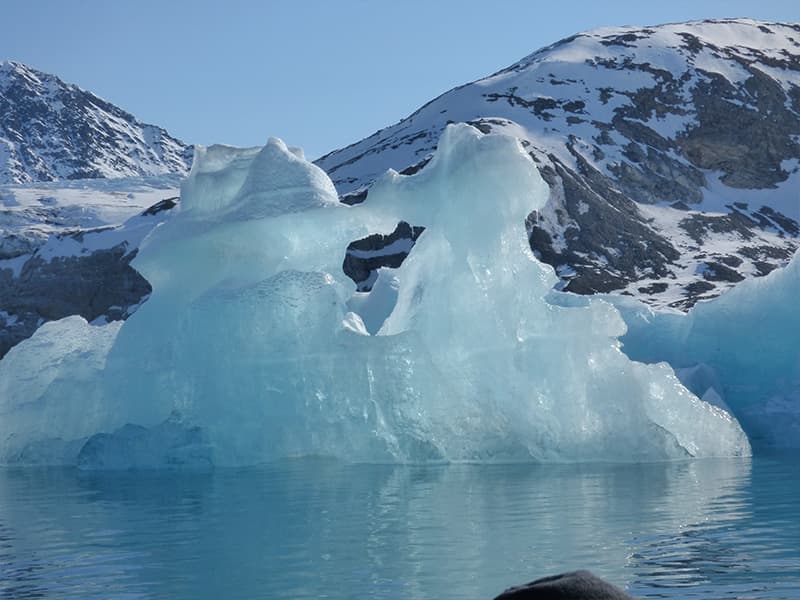
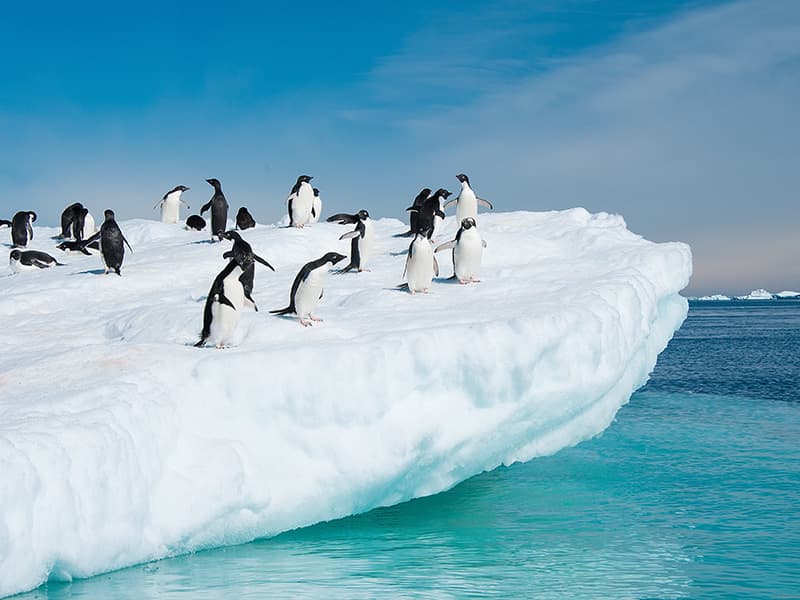
| The Arctic | Antarctica | |
|---|---|---|
| Location | Around the North Pole | Around the South Pole |
| Geography | Ocean surrounded by land | Continent surrounded by ocean |
| Expedition destinations | Svalbard, Greenland and the Canadian Arctic, among others | Antarctic Peninsula, with specialist voyages exploring farther afield |
| Wildlife highlights | Polar bears, walruses, whales, seabirds and other species, depending on location | Penguins, seals, whales and seabirds, depending on location |
| Main expedition cruise season | Generally May to September, varying by destination | Generally late October to March |
| Cultural experiences | Opportunities to learn about living communities and distinct regional cultures | Research, exploration history and historic sites |
Exploring the Arctic
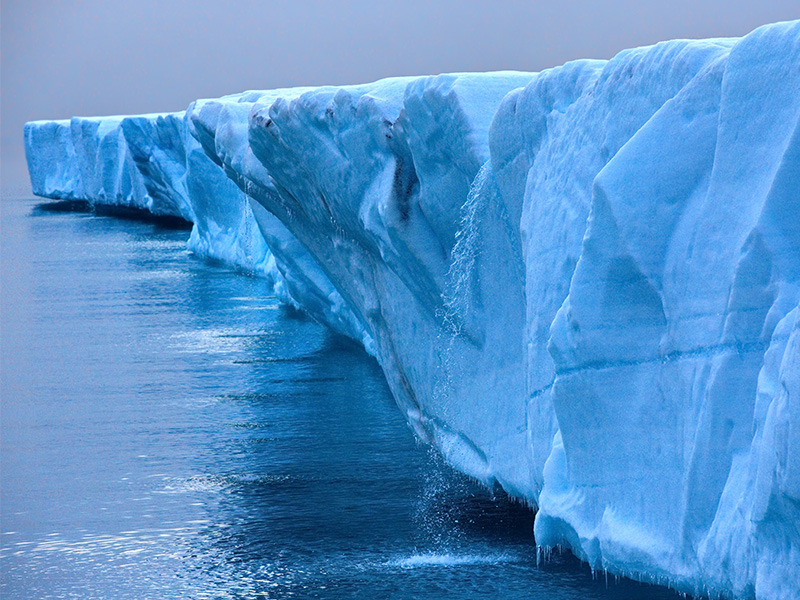
The Arctic offers a remarkable variety of landscapes. Depending on your destination, you might encounter glacier fronts, mountain-lined fjords, tundra flowers or sea ice stretching towards the horizon.
Choosing an Arctic expedition means choosing a particular region, rather than one single experience.
Svalbard is known for its wildlife and glaciated landscapes. Greenland combines dramatic ice formations with opportunities to visit towns and settlements. The Canadian Arctic offers remote waterways, wildlife, Inuit communities and exploration history.
Some northern itineraries also include Iceland or coastal Norway, bringing their own landscapes and experiences to the journey.
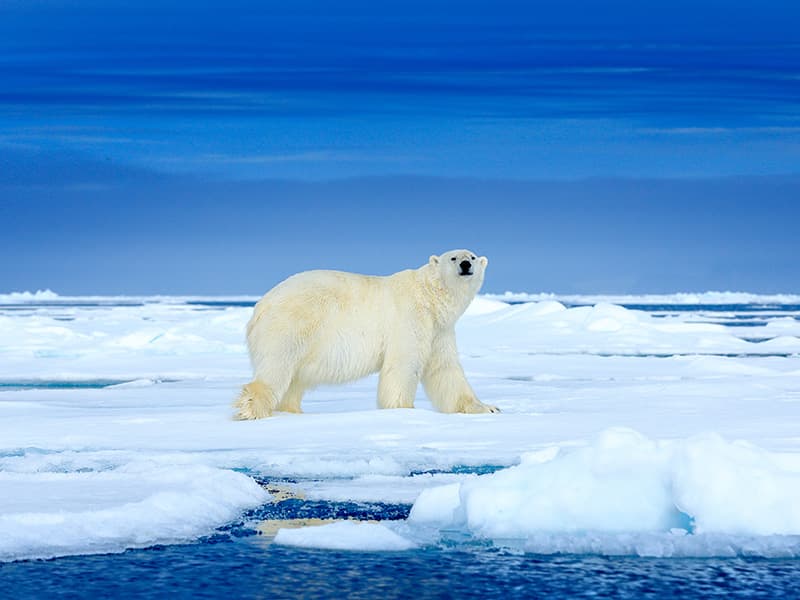
Arctic wildlife
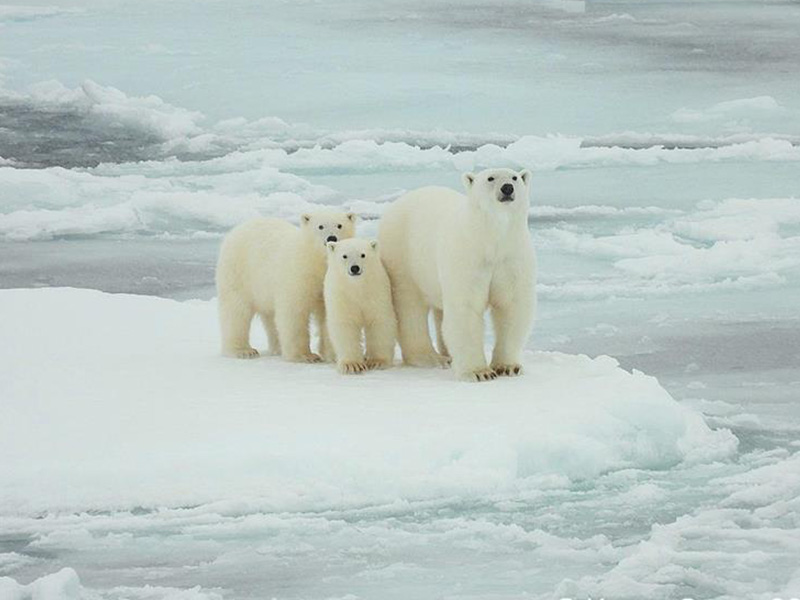
For many travellers, the possibility of seeing a polar bear is a major attraction. Svalbard is one destination associated with these encounters, alongside walruses, reindeer, Arctic foxes and seabirds.
Elsewhere, different species become part of the picture. Your chances of seeing particular wildlife depend on the destination, habitat, season and conditions.
There are no wild penguins in the Arctic. And while an expedition team will use its knowledge to look for wildlife, no sighting can be guaranteed.
People and culture
The Arctic is home to millions of people, including Indigenous Peoples with distinct cultures, languages and relationships with the land and sea.
On itineraries that include community visits, take time to listen, learn and understand the places you are visiting as people’s homes. These encounters can be as memorable as the landscapes, offering perspectives that extend beyond wildlife and scenery
When should you visit the Arctic?
Most Arctic expedition cruises take place between May and September, with the exact season depending on the destination and route.
Earlier departures may feature more sea ice, while later summer can allow access to different coastlines and waterways. Long daylight hours are a feature of many summer voyages, with the midnight sun experienced at sufficiently northern latitudes.
If seeing the Northern Lights is your priority, look at a different style of journey. Autumn and winter voyages along northern Norway offer opportunities during the darker months. They provide a different experience from a summer expedition around Svalbard or Greenland, and aurora sightings remain dependent on conditions.
Exploring Antarctica
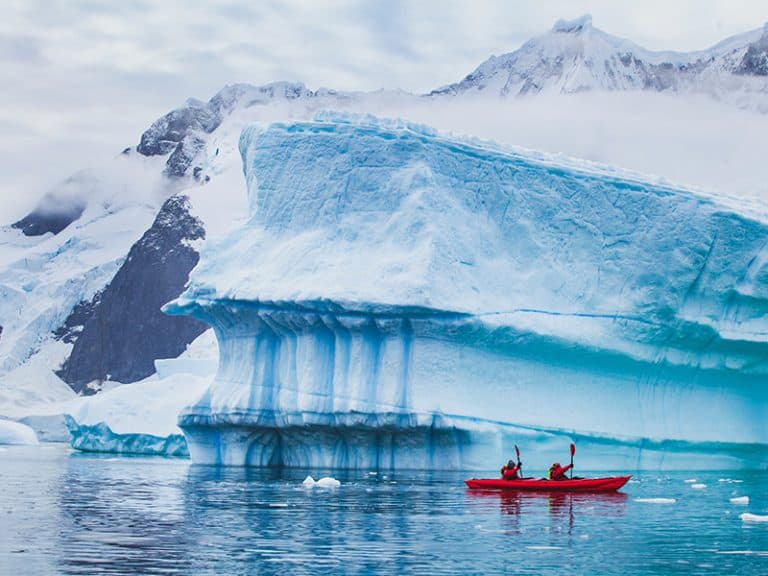
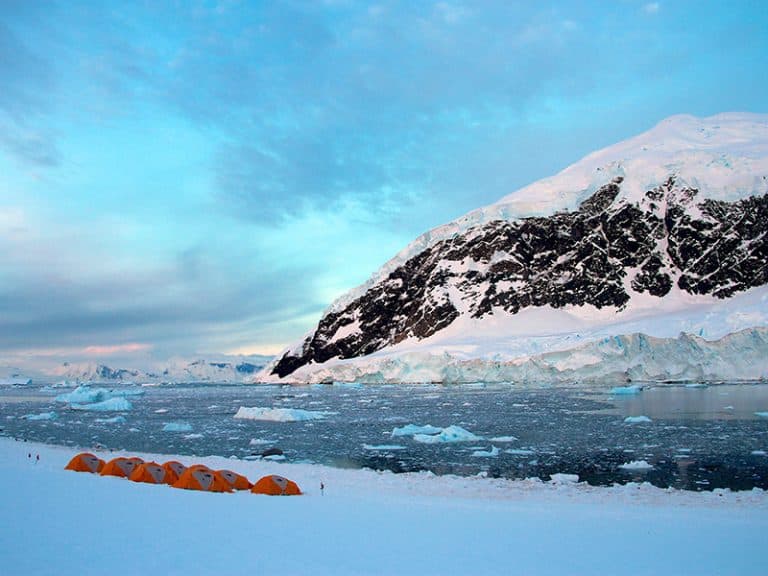
Antarctica’s appeal begins with the scale of its landscapes: mountain ranges rising above glaciers, icebergs shaped by wind and water, and channels that reveal a different view with every turn.
Most expedition cruises from South America explore the Antarctic Peninsula and nearby islands. Longer itineraries may combine Antarctica with the Falkland Islands and South Georgia, geographically separate destinations that add their own wildlife and history.
Specialist voyages explore farther afield, including the Ross Sea and other remote areas. The route you choose makes a substantial difference to the journey.
Antarctic wildlife
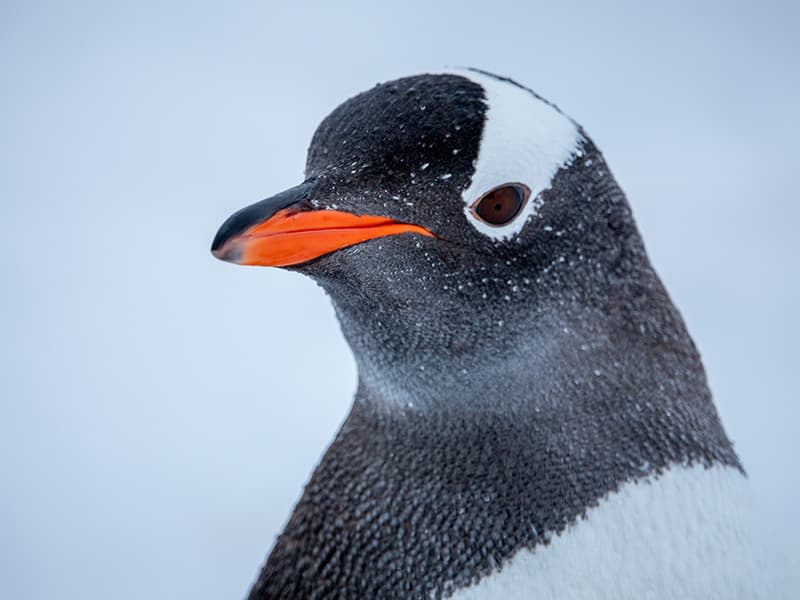
Penguins are among the great attractions of an Antarctic expedition. Around the Peninsula, you may encounter gentoo, chinstrap and Adélie penguins, depending on the sites visited.
Seals and whales add to the experience, whether spotted from the ship or during a Zodiac excursion. Longer voyages including South Georgia offer opportunities to discover its remarkable king penguin colonies.
There are no polar bears in Antarctica. Emperor penguins also require careful itinerary planning: they should not be expected on a typical Antarctic Peninsula voyage.
History and human activity
Antarctica has a human story alongside its wildlife and landscapes.
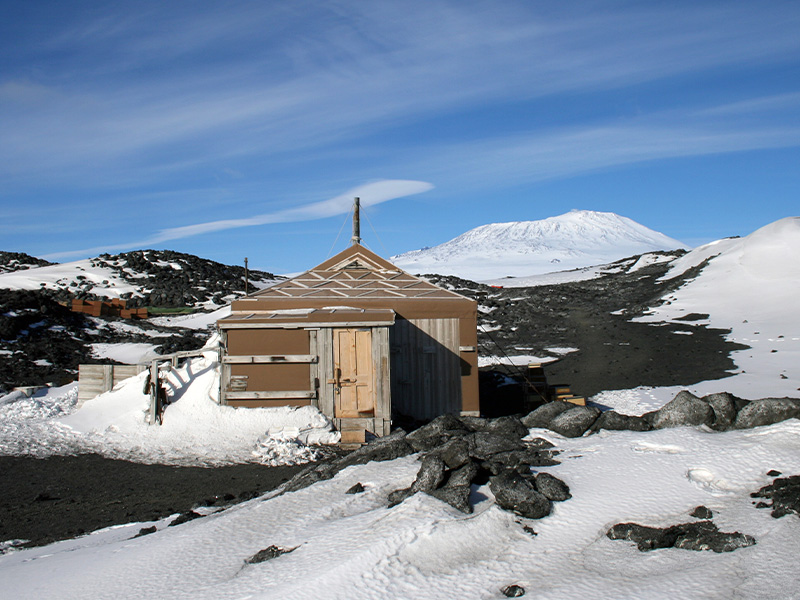
Research stations support scientific work, while historic buildings preserve evidence of earlier exploration and life on the continent. Where access is permitted, a visit to a site such as Port Lockroy can introduce another perspective on the region.
These are working environments and protected places, so visits depend on the itinerary, permissions and conditions.
When should you visit Antarctica?
Most Antarctic Peninsula expedition cruises operate between late October and March.
Early-season voyages often feature extensive snow cover and penguin courtship activity. December and January bring long daylight hours and the progression of the penguin breeding season, while February and March can be particularly rewarding for whale watching.
There is no single best month for everyone. Start with your interests, then compare the seasonal possibilities, remembering that conditions vary each year.
Is the Arctic or Antarctica easier to reach?
That depends on your chosen destination.
Some Arctic embarkation points can be reached from the UK with relatively straightforward European flight connections. More remote Arctic journeys may require additional flights, charter arrangements or longer travel days.
Antarctic Peninsula voyages usually involve travelling to South America before sailing south. Fly-cruise options can replace part of the sea journey with a flight, although Antarctic flights depend on suitable weather.
Compare the complete itinerary, including travel days, rather than the cruise duration alone.
Which polar region should you visit first?
There is no compulsory order.
If penguins and Antarctic ice landscapes have captured your imagination, Antarctica may be the natural starting point.
If you are drawn to polar bears, tundra, northern fjords or the cultures of Arctic communities, begin by comparing Arctic destinations.
Rather than choosing between two labels, think about the experiences that matter most to you. The right region, itinerary and season will follow from there.
Our Cruise Consultants can help you compare Arctic journeys and Antarctic expeditions, finding a voyage that suits your interests and sense of adventure.