From the first glimpse of a penguin porpoising through the water to the sound of a busy breeding colony, penguin encounters are among the great pleasures of an Antarctica expedition.
But which species might you see? That depends on where you travel. Some breed on the Antarctic continent and its neighbouring islands, while others are found farther north, in destinations such as South Georgia and the Falkland Islands.
Here are six species to look out for when choosing your expedition.
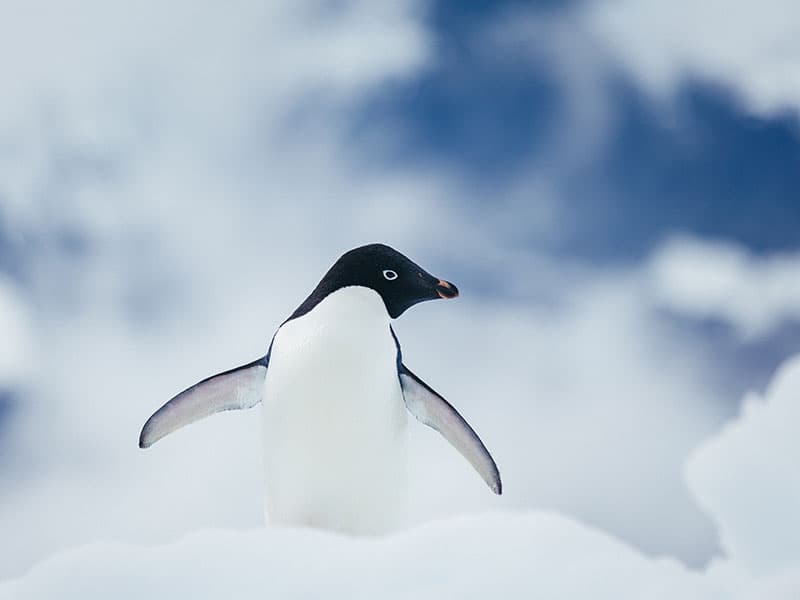
Adélie penguin
With its black head, white belly and distinctive white eye-ring, the Adélie penguin has a wonderfully characterful appearance. These penguins breed around the Antarctic coastline and on nearby islands, building their nests on exposed, rocky ground.
For travellers venturing towards the Ross Sea, Cape Adare is home to an extraordinary Adélie colony. You may also encounter the species on Antarctic Peninsula itineraries, depending on the places visited.
Did you know? Adélie penguins build their nests from pebbles, choosing sites where melting snow can drain away from their eggs.
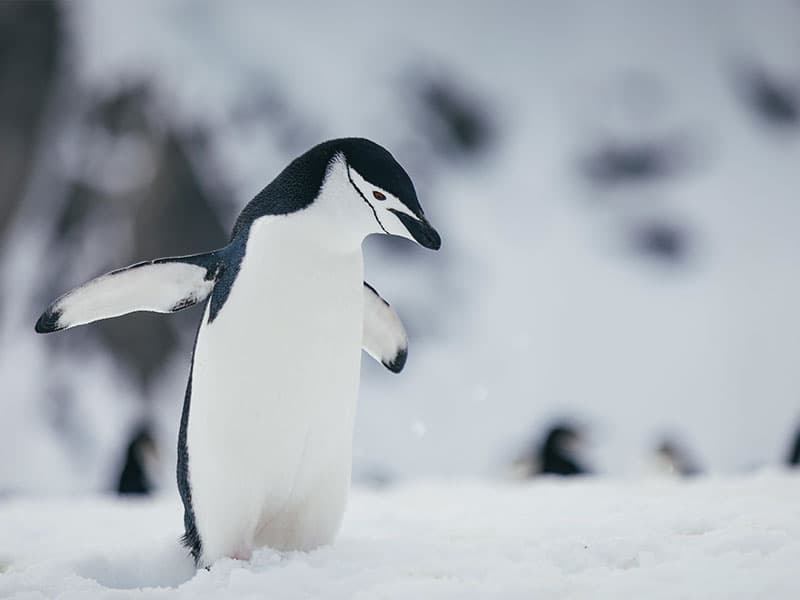
Chinstrap penguin
The narrow black line beneath its chin makes this penguin one of the easiest species to recognise. It looks rather like a little helmet strap, giving the chinstrap its name.
Chinstraps breed mainly around the Antarctic Peninsula and islands of the South Atlantic. Their colonies occupy ice-free ground, where you can watch the busy exchanges between birds returning from the sea and those tending their nests.
Did you know? Both parents share the work of incubating their eggs, taking turns to head out to sea to feed.
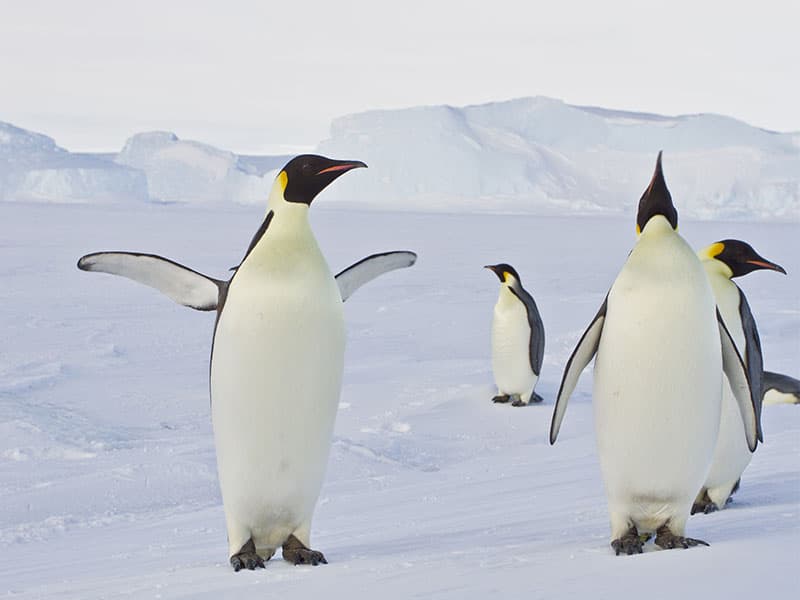
Emperor penguin
The tallest and heaviest of all penguin species, the emperor is one of Antarctica’s most remarkable inhabitants. Its imposing size and pale yellow neck markings make it instantly recognisable.
Seeing emperors usually requires a dedicated expedition rather than a typical Antarctic Peninsula voyage. Specialist journeys towards the colony near Snow Hill Island offer one possibility, with access dependent on weather and sea-ice conditions.
Did you know? Male emperor penguins incubate a single egg on their feet, beneath a protective fold of skin, while the females return to sea to feed.
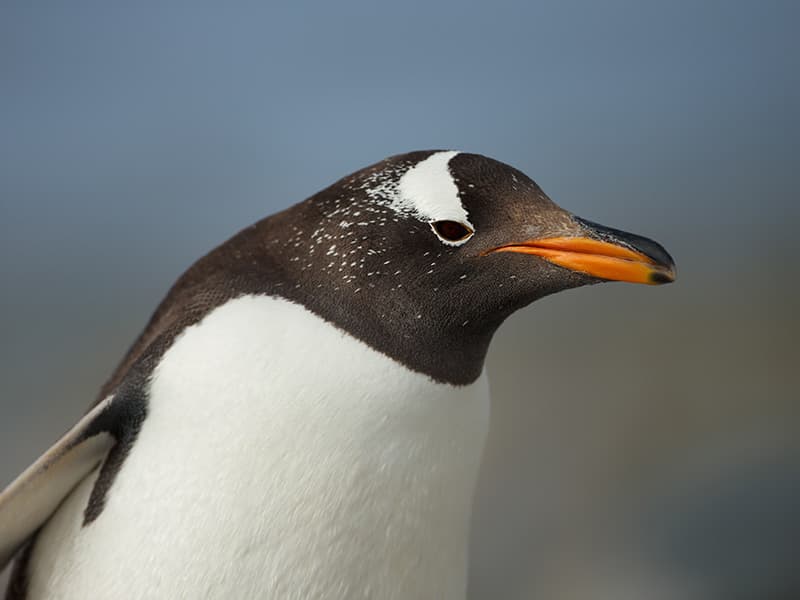
Gentoo penguin
Look for a bright orange-red bill and a white band across the top of the head. Gentoos are a familiar sight at many Antarctic Peninsula landing sites, and they also breed in the Falklands and South Georgia.
Watching a colony gives you time to appreciate the smaller details: the calls between birds, their carefully tended nests and the constant movement between the shore and the sea.
Did you know? Gentoos have a particularly prominent tail, which sweeps from side to side as they walk.
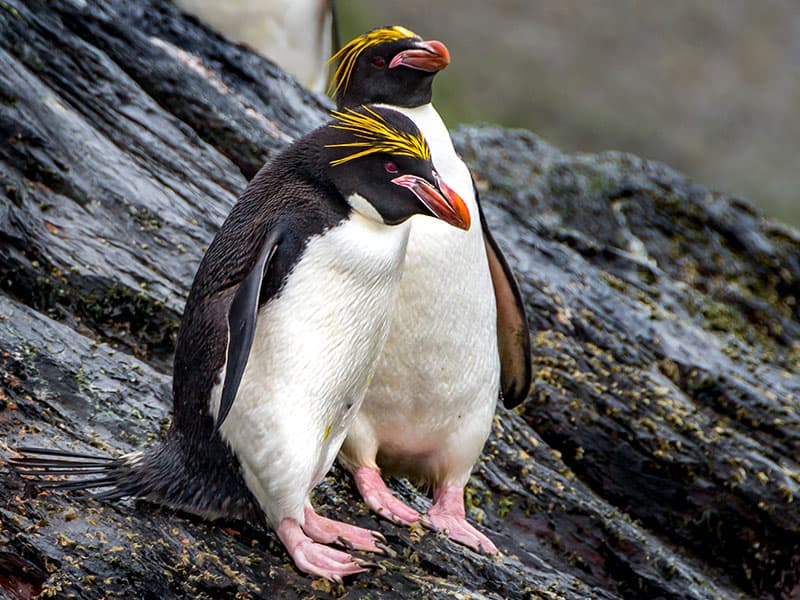
Macaroni penguin
With a striking golden crest, the macaroni penguin brings a splash of colour to the Southern Ocean’s rocky shores.
Macaroni’s breed mainly on sub-Antarctic islands, including South Georgia, although they also have a much more limited breeding presence around the Antarctic Peninsula. An itinerary that includes South Georgia gives you more scope to discover the island habitats associated with this distinctive species.
Did you know? Macaroni penguins can dive beyond 200 metres while searching for food, although most feeding dives are much shallower.
Southern rockhopper penguin
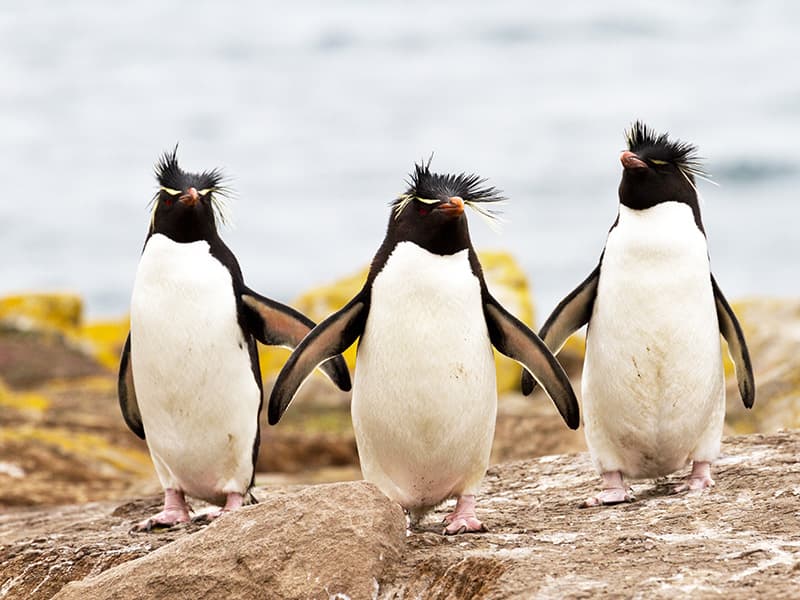
Pale yellow crests and red eyes give southern rockhoppers a wonderfully expressive appearance. They are the smallest of the crested penguins.
You won’t normally find them on an Antarctic Peninsula voyage. Instead, look for an expedition that includes the Falkland Islands, where they breed. This is one reason to consider a longer journey combining Antarctica with destinations farther north: each place introduces a different mix of wildlife and habitats.
Did you know? Despite their name appearing in many Antarctic wildlife guides, southern rockhoppers breed on islands well north of the Antarctic continent.
Find your Antarctic wildlife expedition
The places you visit make a real difference to the penguins you might encounter. Whether you’re drawn to the Antarctic Peninsula, the wildlife of the Falklands and South Georgia, or a specialist emperor penguin expedition, our team can help you explore the options.
Speak to our Exploration Cruise Consultants to book an expedition cruise to Antarctica that suits your interests and sense of adventure.